










A Guide to HVAC Control Systems for Facility Managers
If you are managing a commercial building in Australia, you know that HVAC consumption typically accounts for 40–50% of your total electricity bill. For facility managers, ensuring that these systems run efficiently is critical for both occupant comfort and the bottom line.
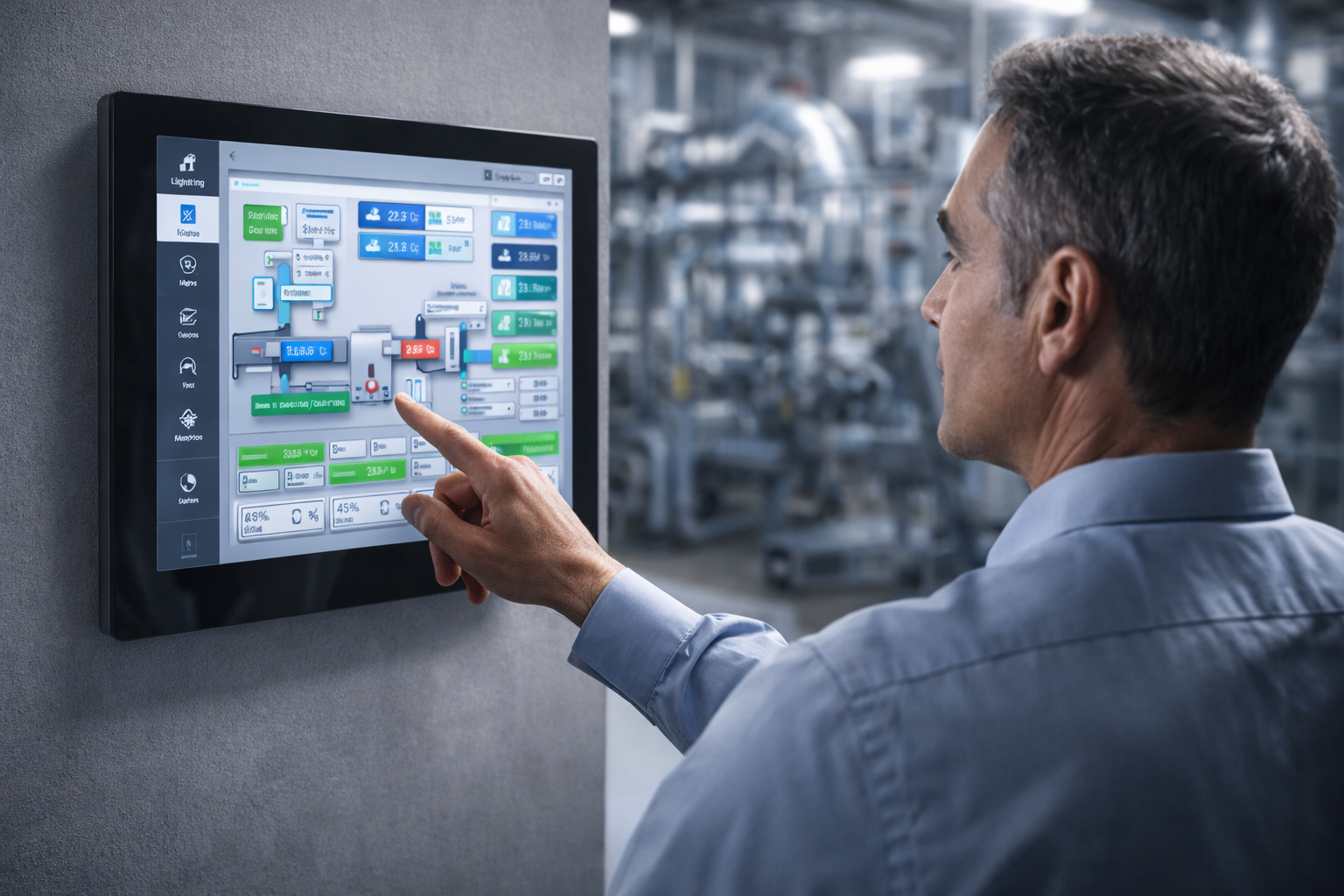
A modern HVAC control system—often integrated into a broader Building Management System (BMS) or Building Automation System (BAS)—is the digital intelligence that runs your facility. It automates the flow of air and water, allowing your building to react to real-time demands rather than relying on manual adjustments.
At Controls Traders, we have over 40 years of industry experience supplying high-quality building automation controls across Australia. Whether you are looking to understand your current setup or planning an upgrade, here is your essential guide to how an HVAC control system works.
The Core Components of an HVAC Control System
An effective control system can be broken down into three main categories: the brain, the nervous system, and the muscles.
1. The Brains: Controllers and Thermostats
The controllers are the digital intelligence of your HVAC system. They receive data from the building, process it through programmed logic (like PID loops), and send commands to the mechanical equipment.
- Stand-alone Controllers: Ideal for local control of individual zones or small equipment.
- BMS Controllers: For large facilities, Direct Digital Control (DDC) units connect via open communication protocols like BACnet or Modbus. This allows all equipment to be monitored and managed from a central supervisor or touch screen. We supply highly capable controllers from brands like iSMA, Siemens, and Schneider.
2. The Nervous System: Sensors
No matter how advanced your controller is, it cannot maintain efficiency if it receives inaccurate data. Sensors measure the physical environment and feed this data back to the BMS.
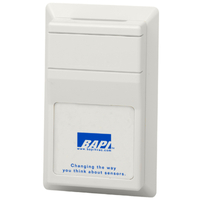
- Temperature Sensors: Used in rooms, ducts, and pipes to ensure cooling and heating targets are met.
- CO₂ and Indoor Air Quality Sensors: Critical for Demand Control Ventilation (DCV). By monitoring CO₂ at the breathing zone height, the BMS knows exactly how many occupants are in a room and adjusts fresh air intake accordingly, saving energy when rooms are empty.
- Differential Pressure Sensors: These measure pressure drops across filters (triggering "dirty filter" alarms) or monitor static pressure in ducts to control fan speeds.
For a detailed breakdown of which sensor type suits which application — room vs. duct vs. immersion, thermistor vs. RTD — see our guide on choosing the right temperature sensor for your BMS.
3. The Muscles: Actuators and Valves
Once the controller makes a decision, it needs a physical mechanism to execute it. This is where Actuators and Valvescome in.
- Valve Actuators: These are electric motors that open, close, or modulate valves to control the flow of chilled or hot water through the building.
- Damper Actuators: These regulate the flow of air through ductwork and Air Handling Units (AHUs).
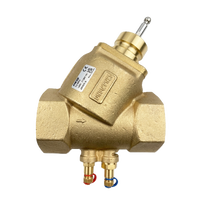
- Pressure-Independent Control Valves (PICVs): A major upgrade for variable flow systems, PICVs mechanically absorb pressure fluctuations to prevent over-pumping and "Low Delta T Syndrome," ensuring optimal chiller efficiency. We stock a massive range of premium actuators and valves from Belimo and Siemens.
4. The Efficiency Drivers: Variable Speed Drives (VSDs)
Older HVAC systems ran fans and pumps at 100% full speed constantly, wasting immense amounts of power. Variable Speed Drives (VSDs) act as a "dimmer switch" for your heavy motors. By slowing a fan down by just 20% to match the actual airflow demand, a VSD can reduce the fan's electricity consumption by roughly 50%.
Protecting Your Investment
Facility managers know that "uptime" is everything. Your control panels contain sensitive electronics that are highly susceptible to "dirty power" and momentary voltage sags. Integrating Industrial UPS Systems into your mechanical switchboards ensures that your BMS controllers, network hardware, and field power supplies stay online during power blips, preventing data corruption and plant room blindness.
Frequently Asked Questions (FAQs)
What is the difference between a stand-alone controller and a BMS controller? A stand-alone controller provides local control for a specific piece of equipment or zone, whereas a BMS controller integrates into a larger network (often using BACnet or Modbus) to allow centralized monitoring, logging, and remote tuning of the entire building.
How can I improve my existing HVAC energy efficiency? The fastest ways to improve efficiency are upgrading to Variable Speed Drives (VSDs) to reduce fan/pump speeds at partial loads, and installing Pressure-Independent Control Valves (PICVs) to prevent chilled water overflow. Additionally, ensuring your CO₂ sensors are correctly placed allows for intelligent Demand Control Ventilation.
Where can I buy HVAC control parts in Australia? Controls Traders is an Australian-owned business based in Stepney, South Australia. We warehouse a massive inventory of trusted global brands—including Belimo, Siemens, Schneider, and Honeywell—and offer fast delivery anywhere across Australia.
What is a Building Management System (BMS) and do I need one? A Building Management System (BMS) — also called a Building Automation System (BAS) — is a centralised software platform that connects and monitors all of your HVAC controllers, sensors, and actuators from a single interface. For buildings with multiple zones, AHUs, or chillers, a BMS is strongly recommended. It enables energy reporting, remote fault detection, scheduled setpoints, and trend logging — all of which are difficult or impossible to manage manually across multiple stand-alone controllers.
How do I know if my HVAC sensors need replacing? Common signs of a failing HVAC sensor include: rooms that are consistently over- or under-cooled despite correct setpoints, BMS alarms flagging out-of-range readings, or sensor values that do not change even when conditions clearly have. Temperature sensors can drift over time, and CO₂ sensors typically require recalibration or replacement every 5–7 years. Controls Traders stocks replacement sensors from Belimo, Siemens, and BAPI for fast Australia-wide delivery.
What is Demand Control Ventilation (DCV) and how does it save energy? Demand Control Ventilation (DCV) uses CO₂ sensors placed at breathing zone height to measure actual occupancy in a space. When CO₂ levels are low — indicating fewer occupants — the BMS reduces fresh air intake to only what is needed. This prevents over-ventilating empty rooms, which is one of the most common sources of wasted HVAC energy in commercial buildings. DCV is particularly effective in spaces with variable occupancy such as conference rooms, open-plan offices, and function centres.
What is the lifespan of an HVAC actuator? Most quality HVAC actuators from brands like Belimo and Siemens are rated for 60,000 operating cycles or more, which in a typical commercial HVAC application translates to 10–15 years of service life. Actuators in high-cycle applications — such as modulating valves on chilled water coils — may wear sooner. Signs of a failing actuator include hunting (constantly adjusting without settling), failure to reach setpoint, or a seized shaft. Controls Traders stocks a full range of direct-replacement Belimo and Siemens actuators ready for same-day dispatch from Adelaide.
Need to replace a faulty part or upgrade your facility's controls? With over 40 years of combined HVAC and automation expertise, our team is ready to help. Request a quote online or call us today on 1300 740 140
Leave a comment
Popular Posts
A Practical Guide to Actuator Selection for HVAC Applications
Spring-Return vs Non-Spring-Return Actuators: Which Do You Need?
PICV Sizing and Selection Guide for HVAC Systems