










How HVAC Flow Meters Improve Chilled Water System Efficiency
You cannot optimize what you cannot measure. For facility managers and HVAC engineers operating large chilled water plants, true energy efficiency goes beyond simply installing a Variable Speed Drive (VSD) or upgrading a chiller. To achieve maximum efficiency and maintain a high Delta T (ΔT), you need real-time data on exactly how much water is moving through your system.
This is where accurate HVAC flow meters become the most valuable diagnostic tools in your plant room.
At Controls Traders, based in Adelaide, we supply a wide range of Flow Meters designed to provide your Building Management System (BMS) with the precise data needed to unlock hidden energy savings.
The Cost of "Blind" Pumping
In many older variable-flow systems, the BMS relies solely on temperature sensors and pressure transducers to control pump speeds. While this provides a baseline of control, it doesn't give the complete picture. Without measuring the actual fluid flow in Litres per second (L/s), your system can easily fall victim to "ghost flows" and over-pumping.
Over-pumping pushes water through the cooling coils too quickly, meaning the water doesn't have time to absorb heat from the building. This results in "Low ΔT Syndrome," forcing your chillers to work harder and drastically reducing plant efficiency.
Types of HVAC Flow Meters
To combat this, integrators use flow meters to measure and calculate thermal energy. Depending on the application and whether you are dealing with a new build or a retrofit, there are two primary technologies:
1. Mechanical Flow Meters Traditional in-line mechanical flow meters use turbines or impellers. They are highly reliable and cost-effective for standard chilled and heating water applications. However, they must be cut directly into the pipework, which requires draining the system—making them better suited for new installations.
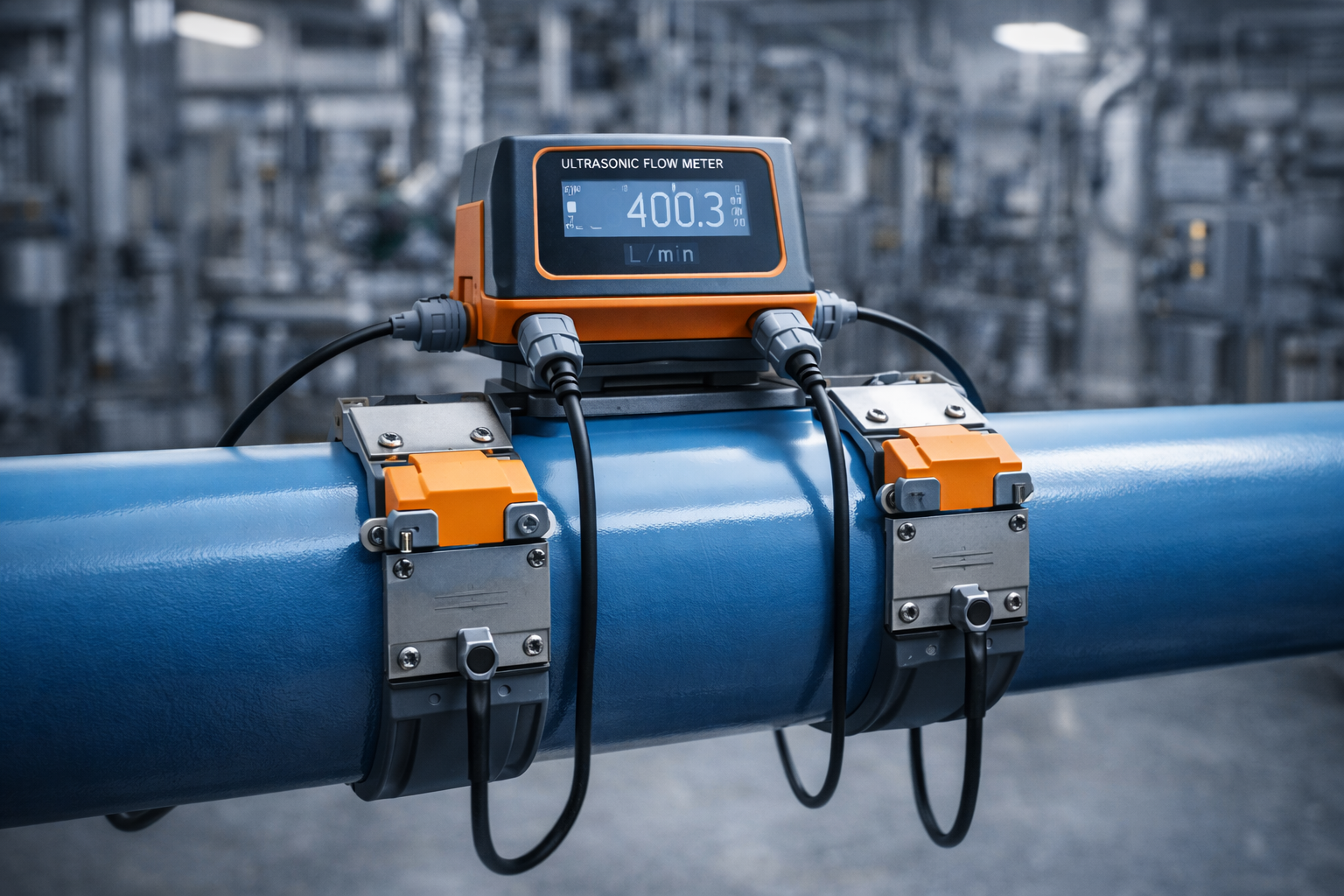
2. Ultrasonic Flow Meters For retrofits and critical systems where shutting down the plant isn't an option, ultrasonic flow meters are the gold standard. These meters clamp onto the outside of the pipe and use sound waves to measure fluid velocity. They are non-invasive, meaning zero pressure drop, zero risk of leaks, and no system downtime during installation.
Integration with the BMS
Modern flow meters do more than just display numbers on a local screen. They feature analog or digital outputs that integrate directly with your BMS. By combining the flow rate from the meter with supply and return temperature data, your controller can calculate the exact thermal energy (kWh) being consumed by the building.
This data can be used to:
- Identify underperforming cooling coils.
- Validate the performance of Pressure Independent Control Valves (PICVs).
- Accurately bill individual tenants for their specific chilled water usage.
Source Your Flow Meters Locally
If you are upgrading a plant room or need to replace a faulty meter, waiting weeks for international freight can stall your handover. Controls Traders warehouses a complete range of Flow Meters for both chilled and heating water applications locally in Adelaide, ready for fast Australia-wide delivery.
Need help selecting between mechanical and ultrasonic options? Contact our technical team today on 1300 740 140.
Frequently Asked Questions
What is Low Delta T Syndrome and how do flow meters help?
Low Delta T Syndrome occurs when chilled water returns to the chiller at nearly the same temperature it left — meaning the building's cooling coils are not extracting enough heat from the water. This forces chillers to run longer and harder, dramatically increasing energy costs. Flow meters allow the BMS to calculate the actual thermal energy being transferred (kWh), identify which coils are underperforming, and give operators the data they need to correct valve sizing or control logic.
What is the difference between a mechanical and an ultrasonic flow meter?
Mechanical flow meters use a turbine or impeller inside the pipe to measure flow and must be cut directly into the pipework. They are cost-effective and reliable for new installations. Ultrasonic flow meters clamp onto the outside of the pipe using sound waves to measure fluid velocity — no cutting, no draining, no system downtime. For retrofits on live systems, ultrasonic is almost always the preferred choice.
Can a flow meter integrate with a BMS?
Yes — modern flow meters feature analog outputs (typically 4-20mA or 0-10V) or digital communication ports (Modbus, BACnet) that connect directly to your DDC controller. By pairing the flow rate with supply and return temperature data from your pipe sensors, the BMS can calculate real-time thermal energy consumption in kWh, which is essential for tenant submetering and chiller plant optimisation.
How do I size a flow meter for a chilled water system?
The key parameters are pipe diameter, fluid type (water, glycol mix), expected flow rate range (L/s or m³/h), and operating pressure and temperature. For ultrasonic clamp-on meters, you also need to know the pipe material and wall thickness. Controls Traders' technical team can assist with sizing — call 1300 740 140 with your pipe specifications.
Do I need a flow meter if I already have a PICV installed?
A PICV controls flow at the terminal unit level, but it does not give you system-wide flow data. A flow meter on the main chilled water header or individual risers provides the macro-level picture — how much total water is moving through the plant — which is essential for chiller staging, energy submetering, and diagnosing overall system health.
Leave a comment
Popular Posts
How HVAC Flow Meters Improve Chilled Water System Efficiency
Common HVAC Sensor Types Explained
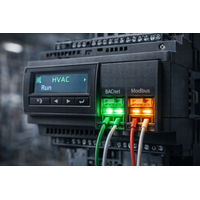
BACnet vs Modbus: Which Protocol Is Best for HVAC Controls?