










BACnet vs Modbus: Which Protocol Is Best for HVAC Controls?
 In the world of Building Management Systems (BMS) and HVAC integration, reliable communication between your controllers, sensors, and actuators is the backbone of an efficient plant room. For integrators and facility managers, choosing the right open communication protocol for Direct Digital Control (DDC) units is a critical decision.
The two undisputed heavyweights in building automation are BACnet and Modbus.
While both protocols allow controllers and end devices to "talk" to one another on a network, they were designed in different eras and for different primary purposes. At Controls Traders, we supply premium hardware that speaks both languages natively, including iSMA, Siemens, and Schneider controllers.
Here is our technical guide to understanding BACnet and Modbus, and how to choose the right protocol for your next HVAC integration.
What is BACnet?
BACnet (Building Automation and Control networks) was purpose-built for the building automation industry. It is designed specifically to handle the complex, hierarchical data requirements of modern HVAC, lighting, and security systems.
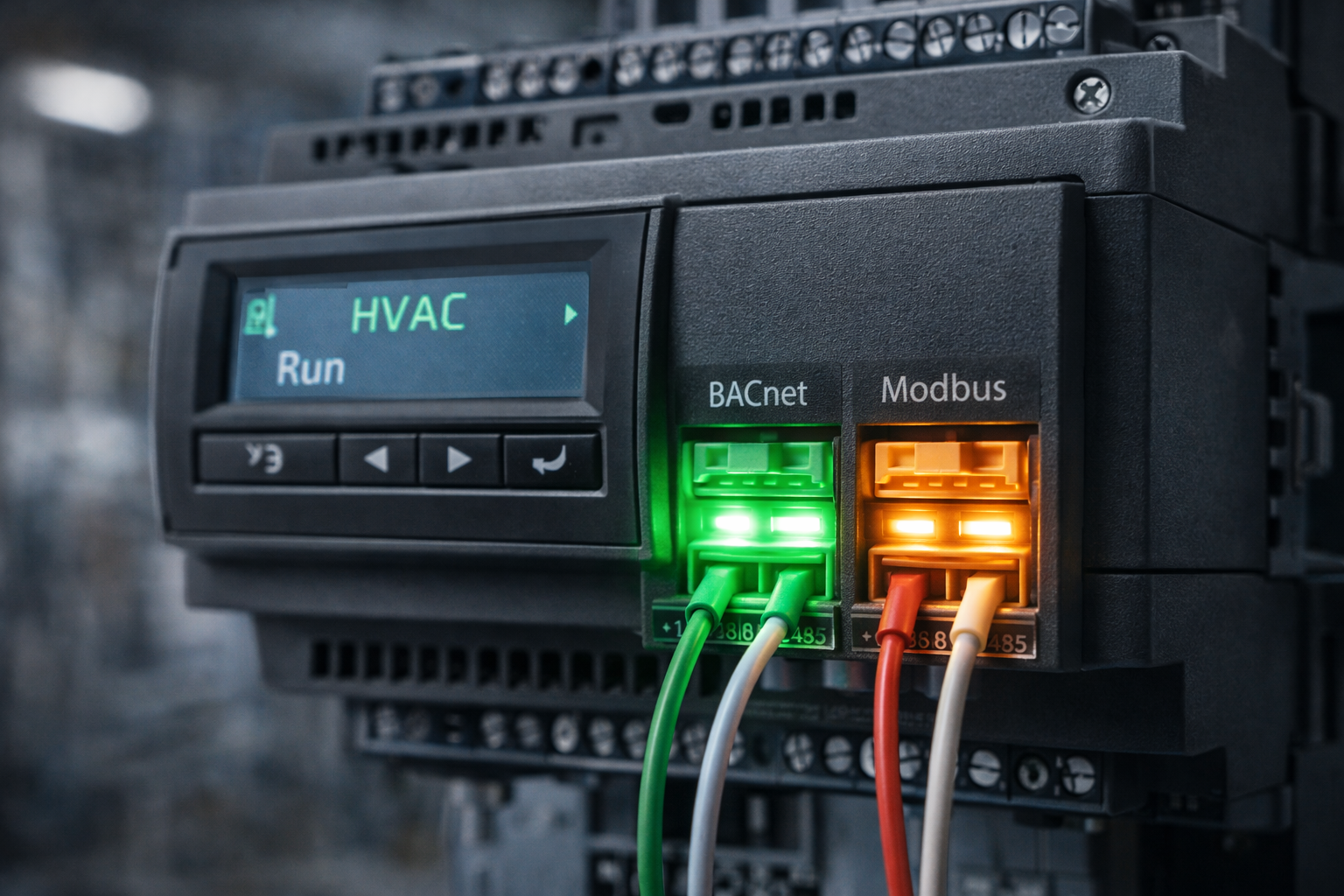
In HVAC applications, you will most commonly encounter BACnet MS/TP (Master-Slave/Token-Passing), which runs on the RS-485 physical layer and connects devices in a daisy-chain topology.
- How it works: A token is passed between controllers; only the device currently holding the token is permitted to transmit data.
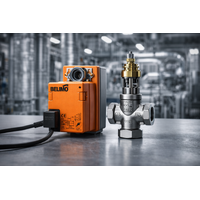
- The Gear: BACnet is the native language for most of the premium BMS controllers we stock, including iSMA, EasyIO, and Siemens. Furthermore, intelligent field devices like Belimo Actuators now frequently come with BACnet MS/TP built-in for seamless integration.
- The Advantages: BACnet provides real-time speed, high reliability, and a rich, object-oriented data structure that makes discovering and mapping complex network points incredibly efficient.
What is Modbus?
Modbus is the older of the two protocols, originally developed for industrial automation and Programmable Logic Controllers (PLCs). Despite its age, it remains fiercely relevant due to its simplicity, robustness, and universal acceptance.
Like BACnet, it often runs over an RS-485 serial connection (known as Modbus RTU) or over Ethernet (Modbus TCP/IP).
- How it works: Modbus uses a strict Master/Slave architecture. A single Master device requests data or sends commands, and the Slave devices (like sensors or drives) simply listen and respond.
- The Gear: Many heavy-duty industrial components, variable speed drives (VSDs), and energy meters rely heavily on Modbus RTU.
- The Advantages: It is lightweight, remarkably easy to troubleshoot, and requires very little processing power from the end devices.
Head-to-Head Comparison
When deciding which protocol to standardize on for a new site or retrofit, system integrators should consider the following differences:
1. Data Structure and Discoverability
- BACnet: Uses an "object-oriented" structure. A BACnet controller doesn't just send a raw number; it sends an object (like an Analog Input) complete with metadata, such as engineering units (°C or Pa), status flags, and descriptions. BACnet devices are also "discoverable," meaning a BMS supervisor can scan the network and automatically pull in all available points.
- Modbus: Uses a register-based structure. It transmits raw data values (e.g., a 16-bit integer). The BMS must be manually programmed with a register map provided by the manufacturer to understand that "Register 40001" equals "Supply Air Temperature."
2. Network Speed and Complexity
- BACnet: Because of token-passing and high bandwidth capabilities, BACnet is ideal for executing rapid, complex logic like PID loops across multiple devices.
- Modbus: Excellent for simple, repetitive polling of data. However, because the Master must individually poll every Slave, a network with hundreds of Modbus devices can suffer from high latency.
3. Application Focus
- BACnet: Best suited for high-level control applications—such as modulating actuators, VSDs, and coordinating complex plant room strategies.
- Modbus: Ideal for simple equipment integrations, such as reading electrical meters, basic PLCs, or polling simple field sensors.
Bridging the Gap in Modern HVAC
Fortunately, you rarely have to choose just one. Modern HVAC systems are inherently hybrid.
For instance, you might use a powerful **Siemens or iSMA** controller acting as a BACnet router to manage the high-level logic of your plant room. That same controller can utilize a secondary RS-485 port to poll a daisy-chain of Modbus RTU electrical meters, seamlessly translating that Modbus data into BACnet objects for the main BMS supervisor to read.
Even field-level devices have adapted to this dual reality. Premium hardware, such as Belimo actuators, are designed to be plug-and-play with major building management systems, offering native compatibility with BACnet, Modbus RTU, and Modbus TCP/IP straight out of the box. This ensures faster commissioning and dramatically reduces the hassle of integrating third-party controls.
Need Help Selecting Your BMS Hardware?
Whether you are pulling MS/TP cable for a network of BACnet controllers or integrating legacy Modbus RTU field devices into a new digital BMS, selecting the right hardware is essential.
Controls Traders is an Australian-owned supplier located in Stepney, Adelaide. We warehouse a massive inventory of DDC controllers, gateways, and smart actuators from globally trusted brands like Belimo, Siemens, Schneider, and Honeywell.
We offer fast, reliable delivery anywhere, Australia-wide.
Ready to upgrade your control network? Request a quote online or call our technical team today on 1300 740 140 to discuss your protocol integration needs
Leave a comment
Popular Posts
Common HVAC Sensor Types Explained
BACnet vs Modbus: Which Protocol Is Best for HVAC Controls?

A Guide to HVAC Control Systems for Facility Managers