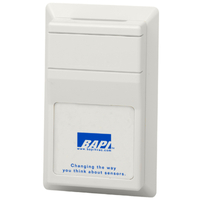











BAPI CO2, Humidity and Temperature Sensors: A Product and Selection Guide
Building Automation Products Inc. (BAPI) manufactures a comprehensive range of sensors for HVAC and building automation applications. The BAPI sensor line covers CO₂, relative humidity, temperature, and combinations of all three parameters — in wall-mount, duct-mount, and outdoor configurations suitable for the full range of commercial and industrial building environments. The range is designed specifically for integration with Building Automation Systems (BAS), with output options to suit both analogue BMS inputs and digital field buses including BACnet MS/TP and Modbus RTU.
Controls Traders is an authorised Australian distributor of BAPI products, supplying the sensor range to mechanical contractors, building automation integrators, and consulting engineers across South Australia and nationally. This guide covers the BAPI sensor product categories, configuration options, output types, accuracy specifications, installation requirements, and selection guidance for common HVAC and BAS applications.
BAPI Sensor Product Categories
The BAPI range is structured around parameter combinations and mounting configurations, allowing engineers and BAS integrators to select the minimum sensor complexity needed for each application. The primary product categories are:
| Sensor Type | Parameters Measured | Available Mounting | Typical Application |
|---|---|---|---|
| CO₂ only | CO₂ concentration (ppm) | Wall, duct | Demand-controlled ventilation (DCV), CO₂ monitoring |
| CO₂ + temperature | CO₂ (ppm), temperature (°C) | Wall, duct | Zone control with DCV, replace two separate sensors |
| CO₂ + relative humidity | CO₂ (ppm), relative humidity (%RH) | Wall | IAQ monitoring where temperature is measured separately |
| CO₂ + RH + temperature | CO₂ (ppm), relative humidity (%RH), temperature (°C) | Wall | Full zone IAQ sensor — single device, all parameters |
| Humidity + temperature | Relative humidity (%RH), temperature (°C) | Wall, duct, outdoor | AHU humidity control, outdoor enthalpy measurement, zone monitoring |
| Temperature only | Temperature (°C) | Wall, duct, immersion, outdoor | Zone and duct temperature sensing, pipe immersion measurement |
Combination sensors deliver a meaningful installation efficiency advantage: where CO₂, humidity, and temperature are all needed in a single zone, one combination sensor requires one mounting location, one conduit entry, and — if using a digital output — a single pair of signal conductors carrying all three parameters to the BMS. This compares favourably with three separate sensors requiring three mounting locations, three conduit entries, and three sets of analogue wiring.
CO₂ Measurement — NDIR Technology
BAPI CO₂ sensors use Non-Dispersive Infrared (NDIR) sensing technology — the HVAC industry standard for CO₂ measurement. The NDIR cell passes infrared light through a sample chamber; CO₂ molecules absorb radiation at a characteristic wavelength of 4.26 μm. The ratio of the absorbed signal to a simultaneously measured reference signal (at a wavelength not absorbed by CO₂) is processed by the sensor electronics and converted to a CO₂ concentration reading in parts per million (ppm). A two-channel measurement approach compensates for gradual degradation of the infrared source over the sensor's service life, maintaining accuracy without requiring frequent external calibration.
BAPI CO₂ sensors incorporate automatic temperature compensation to maintain accuracy across the installation environment temperature range typical of wall-mount occupied space and duct applications. Without temperature compensation, the thermal expansion of gases in the NDIR sample chamber would introduce a systematic error as ambient temperature varies across the operating range — a particularly relevant consideration for duct sensors installed in AHU return sections where air temperature may vary seasonally.
Typical BAPI CO₂ sensor specifications:
- Measurement range: 0–2,000 ppm (standard HVAC DCV range) or 0–5,000 ppm (extended range for higher-occupancy or safety-monitoring applications)
- Accuracy: ±50 ppm ± 3% of reading at calibration temperature
- Automatic Baseline Calibration (ABC): 7-day or 14-day cycle, field-selectable on many models
- Manual calibration: Available on most models via a calibration port for zero and span adjustment using reference gas — necessary for continuously occupied spaces where ABC cannot function correctly
- Warm-up time: Typically 2–5 minutes to stable reading after power-up
ABC is effective for the majority of commercial building applications where the monitored space is regularly unoccupied. For continuously occupied environments — certain healthcare facilities, 24-hour operations centres, or manufacturing spaces — manual calibration against 400 ppm reference gas should be scheduled on an annual basis. Record calibration dates and readings in the asset management system or BMS historian.
Relative Humidity Measurement
BAPI humidity sensors use a capacitive polymer sensing element — the industry-standard technology for HVAC-grade humidity measurement. A thin polymer film changes its dielectric constant in proportion to the relative humidity of the surrounding air; the resulting change in capacitance is measured electronically and converted to a percentage relative humidity (%RH) reading. Capacitive polymer sensors are well-suited to commercial HVAC applications: they respond reasonably quickly to humidity changes, recover well from brief condensation events (assuming the condensation clears), and maintain accuracy across the 0–95% RH range encountered in occupied building environments.
Typical specifications for BAPI capacitive humidity sensors:
- Measurement range: 0–100% RH (non-condensing)
- Accuracy: ±3% RH at 25°C across the 10–90% RH range (typical; may be slightly reduced at extremes near 0% or 100% RH)
- Operating temperature range: 0–60°C for duct sensors; 0–50°C for wall-mount sensors
- Response time: Typically 30–60 seconds to 90% of step change in humidity (sensor-dependent)
An important application note for BAPI humidity sensors — and capacitive polymer sensors generally: these sensors are susceptible to contamination from high concentrations of volatile organic compounds (VOCs). Prolonged exposure to elevated VOC concentrations can cause the polymer film to absorb contaminants, leading to a permanent offset error in the humidity reading that cannot be corrected by recalibration. For most commercial HVAC applications — offices, retail, educational facilities, healthcare — this is not a concern. In spaces with regular solvent-based cleaning operations, paint spray booths, laboratories with organic solvent use, or industrial processes generating high VOC loads, confirm sensor suitability with the specifying engineer before installation. In those environments, BAPI or the Controls Traders technical team can advise on appropriate sensor selection or placement strategies to minimise exposure.
Temperature Measurement
BAPI temperature sensors are available with thermistor (NTC) or platinum RTD (PT100, PT1000) sensing elements, with the choice depending on the application accuracy requirements, cable run length, and BMS input type.
Thermistor (NTC) elements — typically 10 kΩ NTC — are the most common choice for wall-mount room temperature sensors in commercial BAS applications. The 10k NTC characteristic is supported natively by virtually all BMS platforms as a standard universal input type, and the passive thermistor output requires no sensor power supply (the BMS provides a small excitation current). NTC thermistors provide good sensitivity across the typical occupied space temperature range of 15–35°C, with accuracy generally better than ±0.5°C when the BMS input is correctly characterised to the thermistor curve. For longer cable runs — typically above 30–50 m — the cable resistance relative to the thermistor impedance becomes a source of measurement error; in these cases, an active 4-20 mA or 0-10 V output is preferred.
Platinum RTD elements (PT100 or PT1000) offer higher accuracy and better linearity across a wider temperature range than NTC thermistors, and are typically specified for duct and immersion sensors where temperatures may extend below 0°C or above 60°C, or where measurement accuracy better than ±0.5°C is required. PT1000 elements are generally preferred over PT100 for HVAC applications because the higher base resistance (1,000 Ω vs 100 Ω at 0°C) reduces the relative contribution of cable resistance to measurement uncertainty.
Active temperature sensor outputs (4-20 mA or 0-10 V, requiring 24 VAC/DC supply) are available on BAPI combination sensors, and are recommended for cable runs exceeding approximately 50 m, or where the sensor is installed in high-electrical-noise environments such as plant rooms with variable-speed drives.
Output Options and BMS Integration
BAPI sensors are available with a range of output options to match the input types and field bus architecture of the building automation system. Selecting the correct output at the time of order is important — most BAPI sensors are configured at the factory for a specific output type, and field conversion between output types is not generally supported.
| Output Type | Signal | Typical Use Case |
|---|---|---|
| Analogue voltage | 0–5 V or 0–10 V | BMS analogue input, cable runs under 30 m in low-noise environments |
| Analogue current | 4-20 mA | BMS analogue input, longer cable runs, electrically noisy plant rooms |
| BACnet MS/TP | Digital RS-485 | Direct BMS field bus integration; multiple parameters on single two-wire bus |
| Modbus RTU | Digital RS-485 | Modbus-compatible controllers, data loggers, energy metering systems |
| Passive thermistor | 10k NTC resistance | Temperature-only sensing via BMS universal input (no power supply required) |
For combination sensors measuring CO₂, humidity, and temperature in a single housing, BACnet MS/TP or Modbus RTU outputs are strongly recommended over analogue. With analogue outputs, each parameter requires a dedicated pair of conductors, a dedicated BMS analogue input channel, and individual scaling and engineering unit configuration. With a digital output, all three parameters are transmitted over a single screened twisted-pair bus, with each parameter appearing as a separate object or register in the protocol. This can reduce field wiring by 60–70% in multi-sensor installations and simplifies BMS commissioning. For guidance on selecting between BACnet MS/TP and Modbus RTU for your specific BMS architecture, see our article on BACnet vs Modbus (link to be added when article is published).
Installation — Wall-Mount Sensors
BAPI wall-mount sensors are designed to mount on a standard electrical backbox. The sensor uses a two-part assembly: a base plate that fixes to the backbox and accepts the field wiring via a removable terminal block, and a sensor head that clips onto the base. This design has a practical maintenance advantage — the sensor head can be removed for servicing, replacement, or temporary relocation without disturbing the field wiring, which remains connected to the base terminal block.
Correct placement is critical to the accuracy of wall-mount zone sensors. The following guidelines apply across all parameter types:
- Mounting height: 1.2–1.5 m above finished floor level. This corresponds to the breathing zone for seated occupants (for CO₂) and provides a representative zone temperature measurement not influenced by floor-level cold air pooling or ceiling-level heat stratification.
- Distance from supply diffusers: Minimum 300 mm — supply air will locally dilute CO₂ and depress the temperature and humidity reading. In high-throw diffuser arrangements or where the sensor is below a linear slot diffuser, increase this clearance.
- Distance from return air grilles: Minimum 600 mm — CO₂ concentration is locally elevated adjacent to return grilles as air is drawn in from across the zone.
- Distance from operable windows, external doors, or exterior walls: Minimum 1 m — infiltration of outdoor air will depress CO₂ and affect temperature and humidity readings in ways not representative of the general zone condition.
- Avoid direct sunlight: Solar radiation on the sensor housing will cause the temperature measurement to read above actual zone air temperature due to radiant heat gain on the housing surface.
- Avoid dead-air corners and above heat-generating equipment: Poor air circulation locations will not provide readings representative of the occupied zone.
Installation — Duct-Mount Sensors
BAPI duct sensors mount through a circular penetration (typically 32 mm diameter) in the duct wall, secured with a flanged housing and self-tapping screws into the duct sheet metal. The sensing probe extends into the duct airstream. Access for installation and maintenance requires a clear working space adjacent to the duct penetration — confirm that the selected mounting location is accessible after the duct is insulated, and that any insulation jacket can be locally removed and reinstated without damaging the sensor wiring.
Application-specific mounting location guidance:
- CO₂ duct sensors for DCV: Mount in the return air duct section — downstream of the last zone return connection to the return air riser, but upstream of any outdoor air mixing point. This ensures the sensor reads the blended zone return air, not diluted mixed air.
- Humidity sensors in AHU applications: Mount in a well-mixed section of the airstream. For supply humidity control, locate downstream of the cooling coil and reheating elements where supply air conditions have stabilised. For return air sensing (enthalpy economiser or space humidity control), locate in the main return air duct where mixing from all return branches is complete.
- Temperature sensors: Mount sufficiently downstream of any air mixing point, damper, or coil to ensure the duct cross-section is well-mixed. Single-point sensors in large ducts may not represent the average duct temperature if there are significant temperature gradients — multi-point averaging elements are available for large duct cross-sections where accuracy is critical.
Verify duct air velocity at the installation point against the sensor's rated maximum. Most BAPI duct sensors are rated for airstream velocities up to 10–15 m/s. At velocities above this, mechanical fatigue of the probe and errors from velocity pressure effects on the sensing element may reduce long-term reliability and accuracy. At very low velocities (below 0.5 m/s), response time may be extended due to limited convective airflow past the sensing element.
BAPI Sensor Selection Guide
The following selection logic covers the most common HVAC and BAS applications for BAPI sensors. Confirm output type compatibility with the BMS analogue input or field bus architecture before placing an order — this is the most common source of ordering errors and cannot be corrected in the field without sensor replacement.
- CO₂-only DCV control: Select a CO₂ wall or duct sensor with analogue output (4-20 mA for runs over 30 m; 0-10 V for shorter runs). One sensor per independently controlled zone or AHU return duct.
- Zone DCV with thermostat function: Select a CO₂ + temperature combination wall sensor. The single device replaces a standalone CO₂ sensor and a separate room temperature sensor, reducing both hardware cost and installation time.
- Full zone IAQ monitoring (CO₂, humidity, temperature): Select a three-in-one combination wall sensor. Specify BACnet MS/TP or Modbus RTU output to minimise wiring and analogue input consumption. This is the recommended configuration for Green Star or NABERS IAQ-monitored zones where all three parameters must be logged continuously.
- AHU supply or return humidity control: Select a duct humidity + temperature sensor with analogue output. Confirm duct velocity at the installation point and select a model rated for the expected velocity range.
- Outdoor air enthalpy calculation: Select an outdoor-rated humidity + temperature sensor with analogue or digital output. Confirm the sensor's outdoor temperature rating covers the full range expected at the site — for exposed locations in climate zones with sub-zero winter conditions, confirm the lower operating temperature limit.
- Modbus-based systems: Select Modbus RTU output variants across all sensor types. Confirm the Modbus register map with the BMS integrator before ordering — register addresses, data formats (16-bit integer vs floating point), and scaling factors must match the controller's expectations.
For applications not covered by the above, or where there is uncertainty about the correct BAPI product for a specific BMS input type or protocol configuration, contact Controls Traders for technical selection support. The Controls Traders team can advise on current BAPI product availability, lead times for non-stock configurations, and compatibility with major BMS platforms installed in the Australian market.
Frequently Asked Questions
Should I use a combination CO₂/RH/temperature sensor or separate sensors?
A combination sensor in a single housing reduces installation time and wiring cost, and avoids the problem of parameters being measured at different locations in the zone — which can introduce inconsistencies in data interpretation. Where CO₂, humidity, and temperature all need to be monitored in a given zone, a combination sensor is typically the better choice for both cost and data quality reasons. Use separate sensors only when different parameters genuinely need to be measured at different locations — for example, a duct humidity sensor at the AHU to control supply humidity, combined with a wall CO₂ sensor in the occupied zone for DCV. A combination sensor in that scenario would measure supply duct conditions for humidity and zone conditions for CO₂, which are incompatible measurement requirements.
What BAPI sensor should I use for a multi-zone VAV system?
For individual zone control in a VAV system, wall-mount CO₂ sensors in each zone with 0-10 V or 4-20 mA output to the local VAV controller are the standard approach — the zone controller reads CO₂ and adjusts the VAV damper position directly. Where the BMS is managing DCV centrally rather than at the zone controller level, BACnet MS/TP sensors reduce analogue input count significantly: each sensor appears as a BACnet device on the RS-485 field bus, and the BMS reads CO₂ (and temperature and humidity if present) as standard BACnet Analogue Input objects. Contact Controls Traders for advice on the best BAPI model for your specific zone controller type and BMS platform.
How do I wire a BAPI CO₂ sensor to a BMS?
For analogue voltage output sensors (0-10 V), three conductors are needed: 24 VAC/DC power supply positive, signal output (wired to BMS analogue input channel), and power/signal common. For 4-20 mA two-wire loop-powered sensors, only two conductors are needed — the supply and the return, which carries the current signal; the BMS analogue input provides the loop supply voltage. For BACnet MS/TP or Modbus RTU sensors, use a screened twisted-pair cable for the RS-485 bus, connecting data (+), data (−), and cable screen to the sensor terminal block. Observe bus termination requirements: terminate the RS-485 bus at both physical ends with the specified termination resistor value (typically 120 Ω), and ensure all devices on the bus share a common reference (signal ground). Confirm addressing requirements — BACnet MS/TP devices require unique MAC addresses in the range 1–127 for field devices, while Modbus RTU devices require unique slave addresses in the range 1–247.
What is the accuracy of BAPI humidity sensors?
BAPI capacitive polymer humidity sensors are typically rated at ±3% RH accuracy at 25°C across the 10–90% RH range. At the extremes of the measurement range — below 10% RH or above 90% RH — accuracy may be slightly reduced, though these extremes are rarely encountered in normal commercial HVAC operation. In practice, HVAC humidity control setpoints are typically 40–60% RH for comfort control and 30–65% RH for IAQ compliance, well within the range where ±3% RH accuracy is fully maintained. For critical process applications requiring tighter humidity accuracy — pharmaceutical cleanrooms, certain laboratory environments — confirm with Controls Traders whether a higher-accuracy sensor grade is appropriate.
Does BAPI support BACnet?
Yes. BAPI offers BACnet MS/TP (RS-485 physical layer) as an output option across their range of combination and standalone CO₂, humidity, and temperature sensors. BACnet MS/TP sensors connect to the BMS's RS-485 field bus alongside other BACnet field devices, with each sensor appearing as a BACnet device presenting Analogue Input objects for each measured parameter — CO₂ concentration, relative humidity, and temperature as applicable. BAPI also offers Modbus RTU output as an alternative for systems using Modbus-based controllers, sub-meters, or data loggers where BACnet is not available or where the system integrator prefers Modbus. Confirm the required protocol and output configuration with Controls Traders before ordering, as factory configuration is required for digital output variants.
Leave a comment
Popular Posts
A Practical Guide to Actuator Selection for HVAC Applications
Spring-Return vs Non-Spring-Return Actuators: Which Do You Need?
PICV Sizing and Selection Guide for HVAC Systems