










LoRaWAN vs BACnet MS/TP: Which Protocol Should You Use?
For decades, the "twisted pair" ruled the BMS world. If you were fitting out a plant room in a hospital or a university campus, you pulled kilometers of MSTP cable, terminated RS-485 shields, and chased down ground loops.
But with the rise of IoT and the push for cheaper retrofits, LoRaWAN (Long Range Wide Area Network) has entered the chat.
For integrators, the question isn't "which is better?"—it’s "which is right for this specific application?" Using LoRaWAN for critical valve control is a disaster waiting to happen, just as running RS-485 across a 5km campus for three temperature sensors is financial suicide.
At Controls Traders, we stock both the heavy-duty wired controllers (iSMA, EasyIO, Siemens) and modern wireless sensors (like Aranet). Here is our technical breakdown of when to pull cable and when to go wireless.
1. Introduction to HVAC Communication Protocols
The choice between wired and wireless dictates your labour costs, reliability, and commissioning time.
- Wired (BACnet MS/TP): The industry standard for real-time control. It is robust but labor-intensive to install.
- Wireless (LoRaWAN): The disruptor. It offers incredible range and battery life but has very low bandwidth and high latency.
2. What is BACnet MS/TP?
BACnet MS/TP (Master-Slave/Token-Passing) runs on the RS-485 physical layer. It connects devices in a daisy-chain topology.
- How it works: A token is passed between controllers; the device holding the token can talk.
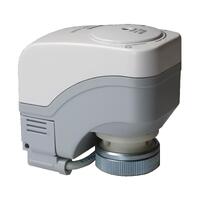
- The Gear: This is the native language of most BACnet Controllers we stock, including iSMA, EasyIO, and Siemens. Even intelligent field devices like Belimo Actuators now often come with BACnet MS/TP built-in.
- Pros: Real-time speed, high reliability, no batteries to replace.
3. What is LoRaWAN?
LoRaWAN is a Low Power, Wide Area Network protocol designed for IoT sensors. Unlike WiFi (high bandwidth, short range) or Bluetooth (short range), LoRaWAN uses sub-gigahertz radio frequencies to transmit small data packets over massive distances.
- How it works: Sensors broadcast data to a central Gateway, which passes it to your BMS or Cloud via IP.
- The Gear: Typically used for environmental monitoring (Temperature, CO₂, Humidity) in hard-to-reach places. Brands like Aranet4 utilize wireless technology to simplify these deployments.
- Pros: 10km+ range (line of sight), 5+ year battery life, penetrates concrete walls well.
4. Head-to-Head Comparison
|
|
|
|
|
|
|
|
|
|
|
|
|
|
|
|
|
|
|
|
|
|
|
|
|
|
|
|
5. Decision Matrix: When to Use Which?
Use BACnet MS/TP When:
- You need Control: You generally cannot "write" to a LoRaWAN device fast enough to control a valve. If you need to modulate a Belimo Actuator to maintain a discharge air temperature, you must use a wired connection (0-10V or BACnet).
- Power is Available: If you are running 24V/240V to a unit anyway, running a comms cable alongside it is trivial.
- Mission Criticality: If the comms drop out, does the plant fail? If yes, use wire.
Use LoRaWAN When:
- Retrofitting Heritage Buildings: You cannot drill through asbestos or heritage listed walls to run cable.
- Sprawling Campuses: You need to monitor a fridge temp in a shed 800m away from the main BMS panel.
- Temporary Audits: You need to log Room Sensors data for a week to prove a fault, then remove the sensors.
6. Example: The "Hybrid" Remote Plant Room
Imagine a university campus with a main chiller plant (Building A) and a small remote lecture hall (Building B) 500m away.
- In the Plant Room (Building A): Use BACnet Controllers (like an EasyIO or iSMA unit) wired via MS/TP to the chillers, pumps, and VSDs. You need second-by-second data to manage the hydraulic pressure and flow,.
- In the Lecture Hall (Building B): Instead of trenching cable for 500m just to check room temperature, install LoRaWAN Sensors (or similar wireless sensors like Aranet) in the rooms. The gateway sits in Building A, picking up the signals wirelessly.
7. Summary and Recommendations
Don't force a square peg into a round hole.
- Control with BACnet: Keep your heavy switching, actuation, and PID loops on the wired bus.
- Monitor with LoRaWAN: Use wireless to gather data from difficult locations without the cabling cost.
At Controls Traders, we have 40 years of industry experience helping integrators design these networks. We stock the BACnet controllers you need for the plant room and the wireless sensors you need for the field.
Need help selecting a gateway or controller? Read the full guide on our website for protocol diagrams and integration options.
Leave a comment
Popular Posts
A Guide to HVAC Control Systems for Facility Managers
Top 5 Belimo Products for Australian HVAC Installers
Where to Buy HVAC Differential Pressure Sensors in Australia