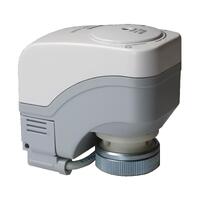











How to Choose the Right Temperature Sensor for BMS | HVAC Guide
In Building Management Systems (BMS), the controller is the brain, but the sensors are the nervous system. No matter how advanced your iSMA or Siemens Controller is, it cannot maintain occupant comfort or energy efficiency if it is receiving inaccurate data.
For mechanical engineers and installers, selecting the "right" sensor isn't just about picking a catalogue number. It requires matching the physical form factor to the medium (air or water) and the electrical characteristics to the controller’s input card.
At Controls Traders, we stock the full spectrum of Sensors & Transducers from trusted brands like BAPI, ACI, and Siemens. Here is a technical breakdown of how to choose the right temperature sensor for your application.
1. Why Temperature Sensors Matter in BMS Control
A temperature sensor is the primary variable for 90% of HVAC control loops.
- Accuracy: An error of just 1°C in a chilled water return sensor can cause a chiller to stage up unnecessarily, wasting massive amounts of energy.
- Response Time: A sensor with too much thermal mass will lag, causing the control loop to hunt (oscillate).
- Durability: Sensors in harsh environments (like cooling towers) must withstand moisture and chemical corrosion.
2. Overview of Sensor Types
We categorise sensors based on where they live and what they measure.
- Room Sensors: These are aesthetic, wall-mounted units. Modern versions, such as those from BAPI or Siemens, often combine temperature with humidity and CO2 monitoring in a single housing.
- Duct Sensors: Available as rigid probes (single point) or flexible averaging elements. Rigid probes are for VAV boxes or small ducts; averaging sensors are critical for mixed-air plenums in AHUs to prevent stratification errors.
- Immersion (Pipe) Sensors: These require a stainless steel or brass thermowell screwed into the pipe. They provide the most accurate reading of fluid temperature.
- Strap-On Sensors: These clamp to the outside of a pipe. While less accurate than immersion sensors (due to ambient air influence), they are ideal for retrofits where you cannot drain the system to install a well.
- Outdoor Sensors: Housed in sun-shields to prevent solar radiation from skewing the ambient air reading.
3. Thermistor vs. RTD: The Electrical Difference
Once you have the physical type, you must select the sensing element. This creates the most confusion for junior technicians.
Thermistors (NTC - Negative Temperature Coefficient)
- Common Types: 10k Type 2, 10k Type 3, 20k.
- How they work: Resistance drops as temperature rises.
- Pros: High sensitivity (large resistance change per degree), cost-effective, and robust wiring connections.
- Cons: Non-linear curve (requires specific look-up tables in the BMS controller).
- Best For: General HVAC applications like room temp, return air, and non-critical loops.
RTDs (Resistance Temperature Detectors)
- Common Types: PT100, PT1000.
- How they work: Resistance increases linearly as temperature rises.
- Pros: Extremely stable, highly accurate over wide ranges, and linear response.
- Cons: More expensive; PT100s specifically require 3-wire or 4-wire transmitters to compensate for lead wire resistance.
- Best For: Critical process control, energy metering (thermal calculation), and central plant supplies.
4. Application-Specific Recommendations
Based on our experience supplying the Australian market, here are common pairings:
|
|
|
|
|
|
|
|
|
|
|
|
|
|
|
|
|
|
|
|
5. Mounting and Placement Tips
Even the best sensor fails if placed poorly.
- Thermal Paste: When installing Pipe Sensors into thermowells, always use thermal transfer compound. Without it, the air gap acts as an insulator, causing slow response times.
- Duct Position: Place duct sensors in the middle third of the duct stream. Avoid placing them immediately after heating coils or humidifiers—give the air time to mix.
- Cable Runs: For long cable runs (>30m), avoid using low-resistance sensors like PT100s unless you use a transmitter. The wire resistance will add to the sensor reading, creating an artificial offset.
6. Common Errors and Troubleshooting
- The "Offset" Mistake: If your BMS reads -40°C or +120°C, you likely have an open or short circuit, or the wrong sensor type selected in software (e.g., configuring a 10k Type 2 input for a 10k Type 3 sensor).
- Self-Heating: Running too much voltage through a tiny thermistor can cause it to heat up slightly, throwing off the reading. Ensure your controller inputs are matched to the sensor specs.
- Water Ingress: For Fridges/Freezers or outdoor sensors, ensure the cable gland is facing downwards to create a drip loop, preventing water from wicking into the housing.
7. Summary
Selecting the right temperature sensor ensures your BMS operates efficiently and your tenants stay comfortable. Whether you need a simple strap-on sensor for a retrofit or a high-precision immersion sensor for a hospital chiller, the details matter.
At Controls Traders, we warehouse a massive range of sensors from BAPI, ACI, and Siemens, ready for fast delivery across Australia.
Need to check a resistance curve or find a compatible thermowell? Read the full guide on our website for selection charts and technical specs.
Leave a comment
Popular Posts
A Guide to HVAC Control Systems for Facility Managers
Top 5 Belimo Products for Australian HVAC Installers
Where to Buy HVAC Differential Pressure Sensors in Australia