










How to Retrofit Pneumatic Controls to a Digital BMS
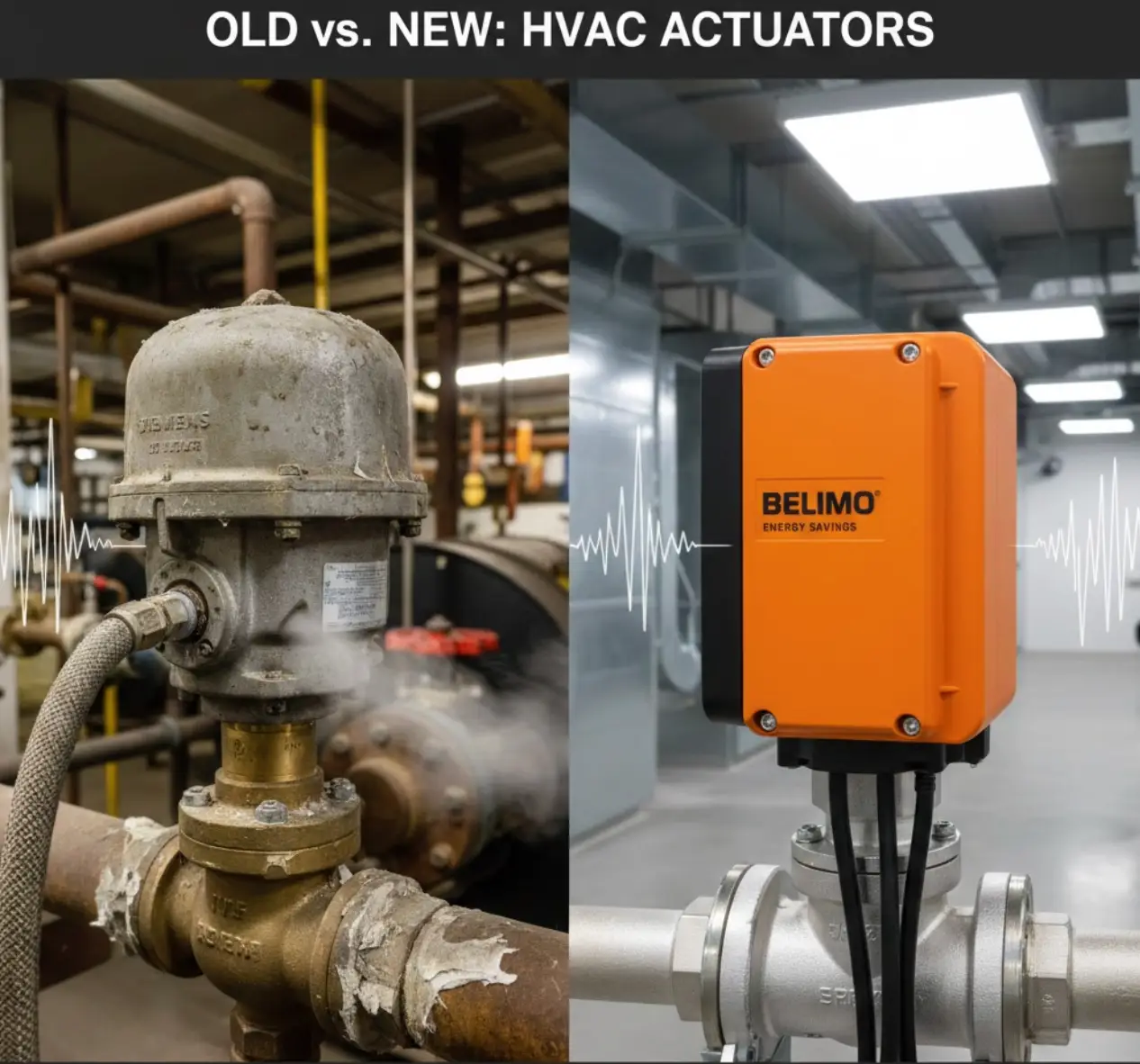
If you walk into the plant room of a hospital in Melbourne or an office block in Sydney built before 2000, there is a good chance you will hear the hiss of compressed air.
Pneumatic controls—relying on 3–15 psi signals to open valves and dampers—were the industry standard for decades. They are durable and safe, but they are also "dumb." They drift, they leak, and they offer zero data visibility.
For modern facility management, "blind" systems are no longer acceptable. The push for NABERS ratings and energy efficiency is driving a massive wave of retrofits across Australia and New Zealand.
At Controls Traders, we supply the hardware for these upgrades every day. Whether you are planning a full rip-and-replace or a hybrid integration, here is the technical workflow for retrofitting pneumatics to a digital Building Management System (BMS).
1. Overview: Pneumatic Systems in Older Buildings
In a legacy pneumatic system, a compressor sends air to a Receiver-Controller (RC). Thermostats act as bleed valves; as the room warms up, the thermostat changes the air pressure in the line. This pressure change physically inflates a diaphragm on a valve or damper actuator to move it.
While mechanically ingenious, these systems have no memory and no feedback loop. If a damper is stuck, the compressor just keeps pushing air, and the facilities manager has no idea until a tenant complains.
2. Why Retrofit to Digital?
The ROI on replacing pneumatics is usually driven by three factors:
- Energy Waste: Compressed air is one of the most expensive utilities in a building. Leaking plastic tubes and constant compressor cycling waste thousands of dollars annually.
- Drift: Pneumatic thermostats require constant re-calibration (often seasonally). Digital sensors do not drift.
- Visibility: You cannot optimize what you cannot measure. A digital BMS allows for trends, alarms, and remote tuning.
3. Key Components Needed
To convert air to electrons, you generally need three categories of hardware:
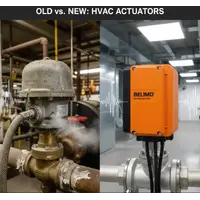
- Electronic Actuators: You will replace the pneumatic "mushrooms" with 24V electric motors. High-torque models are essential here, as older valves often require significant force to close.
- Digital Controllers: These replace the pneumatic logic. You need Direct Digital Control (DDC) units that speak open protocols like BACnet or Modbus. We stock brands like iSMA and EasyIO which are popular for retrofits due to their flexibility.
- Transducers (for Hybrid Systems): If you cannot afford to replace every actuator immediately, you use a P-to-E (Pressure to Electric) or E-to-P transducer. This allows a digital BMS to send a 0-10V signal that is converted into a 3-15 psi air output to drive an existing pneumatic valve.
4. Step-by-Step Retrofit Workflow
-
Step 1: The Audit
- Identify which end devices (valves/dampers) are serviceable. If a 30-year-old globe valve is seized, putting a new electric actuator on it is a waste of money. Replace the entire valve body if necessary.
-
Step 2: Demolition and Capping
- Isolate the main air supply. When removing pneumatic lines, cap them off immediately. If you are doing a staged retrofit (floor by floor), you must maintain system pressure for the rest of the building.
-
Step 3: Mechanical Linkages
- This is the hardest part of the retrofit. Pneumatic actuators often use unique linkages.
Damper Retrofits: Belimo Actuators are the gold standard here because they offer universal clamp mechanisms that fit directly onto most existing jackshafts.
Valve Retrofits: You may need specific linkage kits to mount a modern Siemens Actuator onto an older valve body. Measure the stem stroke and bonnet diameter carefully.
- This is the hardest part of the retrofit. Pneumatic actuators often use unique linkages.
-
Step 4: Wiring and Sensors
- Run 24V power and shielded communications cable (MSTP/IP). Replace the pneumatic wall thermostats with 10k thermistors or networked sensors.
5. Calibration and Commissioning
Unlike pneumatics, digital actuators need to be "taught" their limits.
- Stroke Adaptation: Most modern actuators (like the Belimo MP/MF series) have a button to trigger an adaptation run. The actuator drives fully open and fully closed to map the 0-10V signal to the mechanical stroke.
- Signal Verification: Ensure 0V actually equals 0% (closed) and 10V equals 100% (open). Reverse this logic for heating valves if they are Normally Open (NO).
6. BMS Integration
Once the hardware is installed, the BACnet Controllers come into play. Instead of a simple proportional band (like a pneumatic thermostat), you now configure PID loops in the software. This allows you to implement strategies that were impossible before, such as:
- Optimal Start/Stop
- Night Purge
- CO2 Demand Control Ventilation
7. Common Problems (And How to Avoid Them)
- Under-Torquing: Pneumatic pistons are incredibly powerful. A common mistake is replacing a pneumatic actuator with a weak electric one. For large valves, ensure you select an actuator with sufficient force (e.g., Siemens SAX series with 800N force).
- Hybrid Headaches: If using E-to-P transducers, ensure the air quality is clean and dry. Dirty oil in the air lines will clog the tiny ports in electronic transducers rapidly.
- Power Sizing: Pneumatics didn't use electricity. When adding 50 electric actuators to a floor, ensure your 24V transformers and cabling gauge are sized to handle the VA load (including inrush current).
Conclusion
Retrofitting pneumatic controls extends the life of mechanical plant and drastically cuts energy bills. While the upfront labour is significant, the removal of compressor maintenance and the gain in control precision pays for itself.
At Controls Traders, we have 40 years of industry experience helping contractors navigate these upgrades. We stock the actuators, linkage kits, and controllers you need in Adelaide, ready for Australia-wide delivery.
Ready to start your retrofit? Read the full guide on our website for retrofit tool lists and product recommendations.
Leave a comment
Popular Posts
What Is a Pressure-Independent Control Valve (PICV)?

Choosing the Right Temperature Sensor for Your BMS Setup

LoRaWAN vs BACnet MS/TP: Which Protocol Should You Use?